English translation of the Chinese post originally published 2023-02-24. Translated 2026-10-30 with AI assistance. Historical figures and claims have not been updated or independently verified. 中文原文
Full text — English translation
What kind of education do we need in the AI era? I, Robin, have been raising related educational issues over the past few days. Today, let’s look at Wan Weigang’s perspective.
---
From the perspective of AI, we need to reconsider what growth means for a human being.
Traditional education takes a top-down approach.
Schools, teachers, and parents—the “educators”—hold the initiative. Students, the “recipients of education,” are passive.
We used to compare this kind of education to a gardener cultivating plants: educators arrange the environment, water and fertilize, and occasionally make selections; those being educated grow as instructed.
Now there is a more precise analogy: this is how we train AI.
We define the learning scope in advance, feed the learner materials labeled right or wrong, and then assess the training results. In artificial intelligence, this approach is called supervised learning, the most basic way to train an AI model.
But students taught this way fall short even of GPT. GPT uses self-supervised learning, a form of “unsupervised learning”: it does not need you to label the data and can discover patterns for itself. It is designed to know things its teachers do not.
AI is not human—at least not yet. We believe that everyone has qualities AI cannot, for now, replace. We cannot say exactly what they are, but comparing ourselves with AI can tell us what they are *not*.
---
Put simply, traditional education and AI’s current ways of learning share three shortcomings that human innovators do not.
You might not previously have considered them problems. Seen through the lens of AI, however, all three are obvious.
First, rewards come from the approval of those in charge.
Schools and teachers decide whether a student is a good student, largely on the basis of test scores and obedience.
Second, mistakes receive enormous attention.
Exam-centered education emphasizes “deliberate practice” and “shoring up weaknesses.” You must be highly sensitive to your mistakes: correct every error and learn whenever you discover one.
Third, there is little interest in new things or anything outside the curriculum.
Teachers may even urge students not to get distracted, to read fewer extracurricular books, and to put all their energy into “studying.” The ability to concentrate is considered a major virtue.
AI has these characteristics too. Whatever the training method, fairly objective standards ultimately determine whether the results are good. Since ChatGPT came out, people have delighted in finding its faults. This is even more true of self-driving AI, where every mistake really is a serious mistake. AI’s training scope can be vast, but to reduce errors, you do not want to feed it junk information.
---
Creative people—scientists, artists, and especially entrepreneurs—have precisely the opposite three characteristics.
First, their rewards do not come from a superior’s approval or from meeting some standard. They come from society, consumers, and sometimes their own approval. There is no fixed standard for such recognition: what is “good” this year may be outdated next year. They can even define what society considers “good.”
Second, they are not especially concerned with what they have done wrong or with their weaknesses. What they need are exceptional strengths. You can choose not to do things you are bad at. What should concern you is whether you are good enough at what you do well to earn recognition.
Third, they enjoy pursuing new things. The newer something is, the more likely it is to give them a competitive advantage.
Such people probably need not fear replacement by AI, because their development follows a different path. They lack AI’s mechanical quality and have more fully developed personalities. Most importantly, they have autonomy. They judge good and bad for themselves, decide what to learn and do, and want to leave their own mark on the world. They are self-driven.
---
Why are Americans so innovative?
Scholars generally agree that strict Chinese-style education deprives students of individuality.
Everything revolves around examinations, getting things “right,” and meeting standards.
Students feel constantly at risk of being blamed, in a threatening environment—as though someone were holding a gun to their head. They are always under pressure. Even a score of 95 leaves them feeling insufficiently hardworking or perfect, promising to score 100 next time.
If they actually score 100, they worry about whether they can do it again. Such people’s horizons are bound to be narrow.
When faced with something new, the anxious see danger; the happy see opportunity.
A constant emphasis on vigilance, combined with pressure from every kind of assessment, can cause stomach ulcers in milder cases and learned helplessness in more severe ones.
The biggest problem with AI-style education is students’ lack of autonomy.
Everything is something others want them to do, rather than something they themselves want to do. A machine’s greatest advantage is that it is inherently passive; a defining difference between people and machines is that people want to take the initiative.
People who have been pushed around since childhood and kept passive at home and school often fail to direct their initiative toward constructive ends when they finally gain the freedom to act as adults.
This is true of adults as well as children. If you spend every day acting like a timid, penny-pinching old man, remain self-effacing even after finally achieving something, dare not enjoy yourself when you should, and lose the drive to seize a real opportunity—always kept under control, afraid even to leave work at the appointed time—how much can you accomplish?
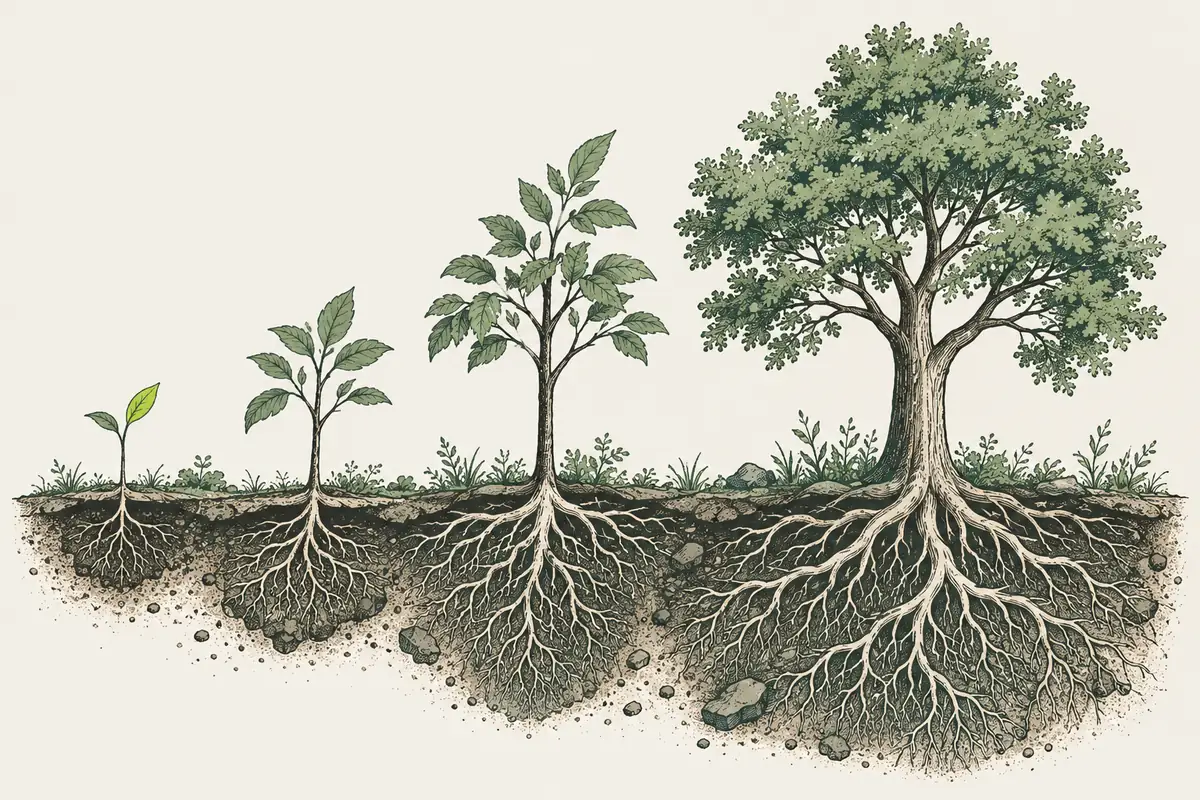
In an age with AI, we need to think carefully about nurturing a person rather than training one.
Creative people can be nurtured, but they cannot be controlled.
You can offer some guidance early on, then gradually let go as they develop.
The autonomy belongs to them.
If you hope they will do unexpectedly good things, you must tolerate unexpectedly “bad” things—things you did not want them to do, or had even intended to prohibit.
AI can be controlled; with talented people, you can only learn to tolerate their independence. They will not bring the sky crashing down. Let them explore and experiment for themselves; children will gradually mature. Only this way can you nurture a whole person. Whether you are a government or a parent, you must restrain your desire for control. You can learn greater patience and the ability to wait.
#萬維鋼精英日課5 (Wan Weigang’s Elite Daily Lessons 5)
These articles are personal notes, book excerpts, and collected reprints. Figures and events reflect the time of the original publication, are not current information, and do not constitute investment advice.
DISCUSSION
Reader comments
What did this article make you think about? Different perspectives and constructive criticism are welcome.
Comments are public immediately. Do not include personal contact details or external links. Automated checks block suspicious solicitation, prohibited transactions and spam; they can make mistakes.
Comments load when you reach this section.
Administrator sign-in Sign out