Note 28 | An Investor’s Scarce Resources Are the Skills and Time a Founder Needs
These are Robin Shen’s original reading notes and commentary, written in his own words after reading Tren Griffin’s A Dozen Lessons for Entrepreneurs. They are not the original book, excerpts from it, or an official publication. Methods and concepts from the book are attributed to Tren Griffin; other sources are identified where stated. For reference only; not investment advice.
English translation of Robin’s Chinese reading notes and commentary. Passages are paraphrased, not verified verbatim quotations from the original English edition.
A Dozen Lessons for Entrepreneurs — Chapter 28, “Keith Rabois: Khosla Ventures” (Part II, “The Venture Capitalists”)
The book describes Keith Rabois as a partner at Khosla Ventures who previously worked at companies including PayPal, LinkedIn, and Square. These descriptions reflect the time when the book was written. He believes investing is hard to learn through simulation because nothing can replace the pressure and feedback of real situations. When founders choose investors, they also often care more about the capabilities an investor can add and the time they can commit than about comparing numbers in the terms.
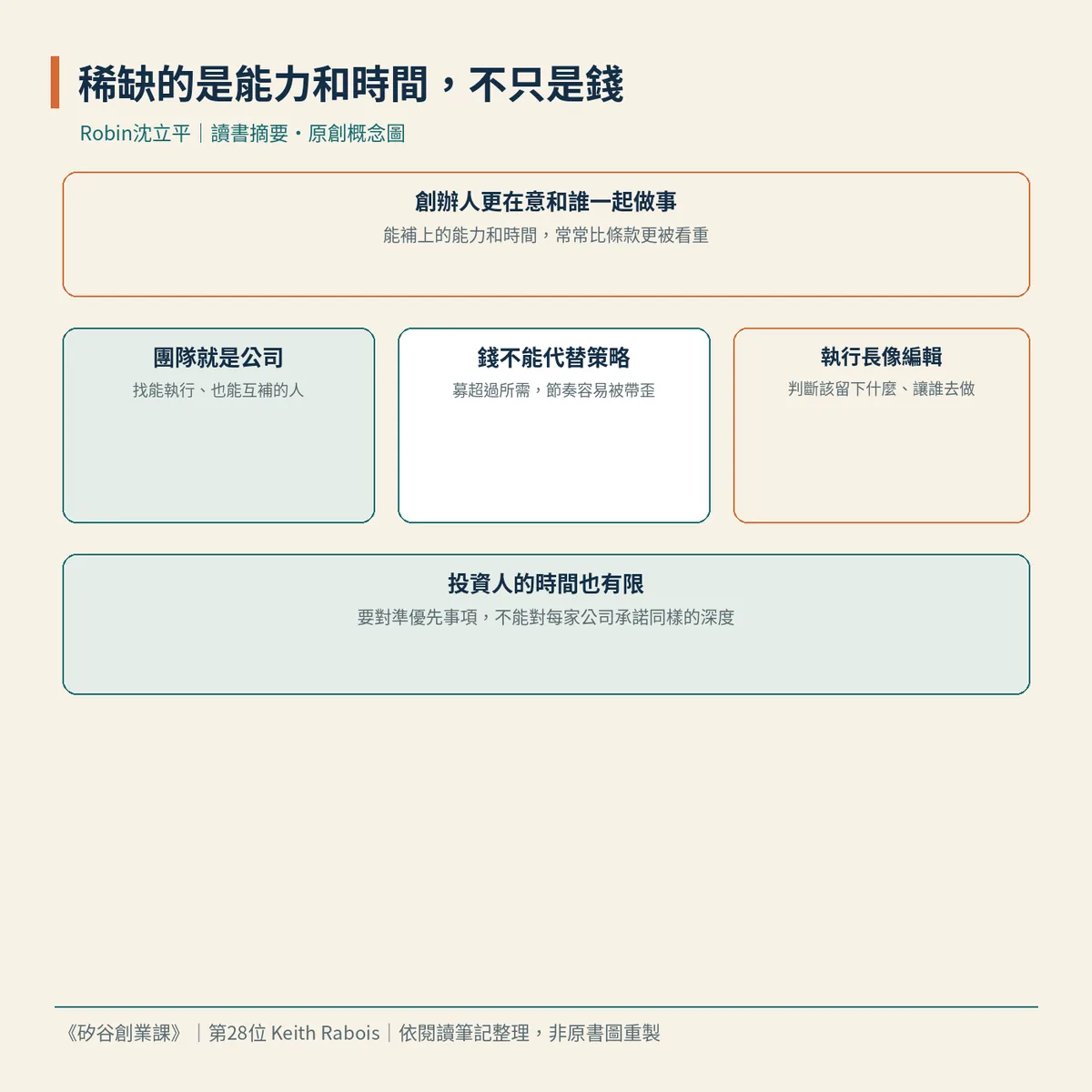
Rabois says founders often care more about whom they work with than about the immediate economics. Investing can only be learned in real situations; simulations cannot replace the pressure and feedback involved. He tends to look in overlooked places for founders who can explain things clearly and see problems others have not yet noticed. Early venture investors who provide real support offer a very different kind of value from investors who only supply growth-stage capital. Angel investors and professional seed investors also contribute different things. Raising more money than needed can sometimes lead a company to replace a considered strategy with spending. The team is the company, and its members must complement one another rather than replicate the same kind of person. He also distinguishes people who have resources from those who can truly execute, considering the latter scarcer. A few people who can get things done can materially change how far a company goes. Recruiting should return to why the company was founded, rather than follow whatever job requirements are in fashion.
Investors’ own time is limited too. It must go toward genuine priorities; they cannot promise every portfolio company the same depth of help. He compares the job of the chief executive officer (CEO) to editing rather than being the principal writer: deciding what stays, what goes, and whether the pacing is right, while letting stronger people complete the work rather than writing every sentence personally. People who explain complex things simply are usually clearer about what should be edited out. That is, investors and CEOs often contribute judgment, structure, and time rather than another seemingly generous sum of money.
The conclusion: for founders, choosing an investor means choosing complementary capabilities and a willingness to commit time. Those are also the truly scarce resources for investors, not how much more money they can put to work. Fundraising should match needs, recruiting should find people who execute, and CEOs should make clear judgments so the right people can build the company.
One deeper insight
I think discussions of “finding the right investor” usually produce a detailed term sheet but vague descriptions of capabilities and time. If you cannot write down exactly what the investor can add and how much time they can actually spend on the company each month, the supposed value-add often exists only in a presentation.
Three suggestions
First, list the two or three capabilities you most need an investor to add and the time they can actually commit. If the only answer is “They can help raise the valuation,” do not yet treat this money as support you have secured.
Second, check whether current funding strengthens a strategy you have thought through or uses spending to fill a gap where direction remains undecided. If it is the latter, write down the work you will stop or postpone and whether the core business would genuinely suffer without it.
Third, write down what the CEO actually did this week: how much was doing the work personally, and how much was judging what to keep and whom to entrust with it? Also identify the next critical person who can execute and the gap that person would fill on the team.
#ADozenLessonsForEntrepreneurs #KeithRabois #ReadingNotes
These are reading notes and reflections based on my personal understanding. I recommend reading them alongside the original book for the full context.
Comments
What do you think? Share your experience or questions.
Sign in to comment, reply or like. Sign in / Sign up
Loading comments…