Note 13 | How a Focused, Small Pain Point Can Grow Into a Sustainable New Business
These are Robin Shen’s original reading notes and commentary, written in his own words after reading Tren Griffin’s A Dozen Lessons for Entrepreneurs. They are not the original book, excerpts from it, or an official publication. Methods and concepts from the book are attributed to Tren Griffin; other sources are identified where stated. For reference only; not investment advice.
English translation of Robin’s Chinese reading notes and commentary. Passages are paraphrased, not verified verbatim quotations from the original English edition.
A Dozen Lessons for Entrepreneurs — Chapter 13, “Jim Goetz: Sequoia Capital” (Part II, “The Venture Capitalists”)
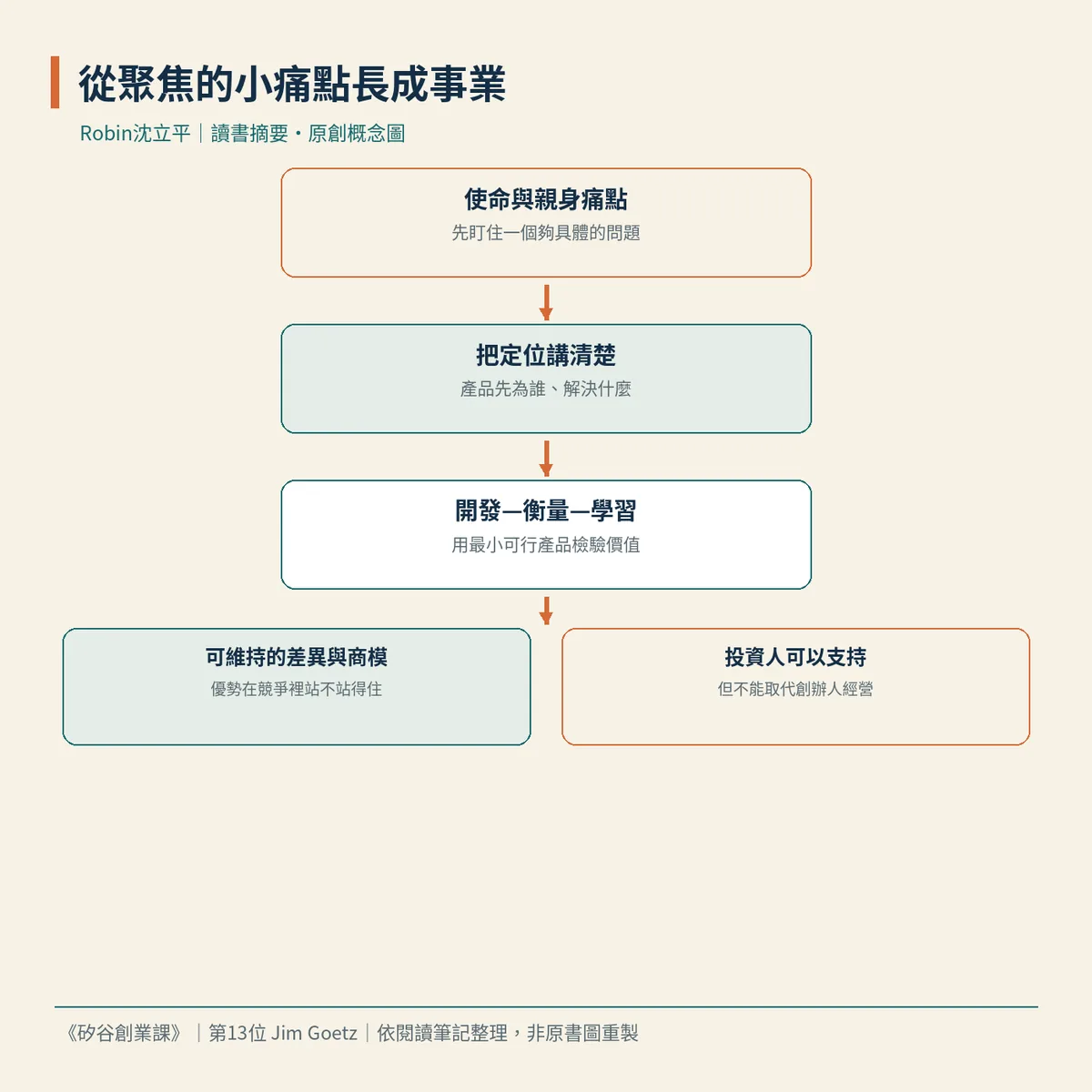
The book describes Jim Goetz as a venture investor at Sequoia Capital who previously served as a general partner at Accel. He is often interested in emerging categories that have not fully formed. Building a sustainable business from such an opportunity does not mean starting broad. First focus on a sufficiently specific pain point, make the positioning clear, and validate value through a product people can examine. Then ask whether differentiation and the way the company makes money can last. Only after that consider what investors can help with and what they cannot replace.
Goetz values people with a sense of mission who genuinely want to make something happen, and backs many entrepreneurs solving their own pain points. The author connects this to understanding the problem. Having experienced it yourself, or clearly seen others struggling with it, usually gives you a better understanding of what needs solving. Next, explain it clearly. Goetz believes founders should be able to explain briefly and plainly exactly whom the initial product serves and what it solves. Early assumptions are hard to quantify precisely in a spreadsheet. A clear story can make it easier to examine whether the positioning holds, while also helping with fundraising and recruiting.
Once you have a direction, use a minimum viable product (MVP) to learn, rather than building the entire vision at once. The author clarifies that before product and market align, the point is not to minimize features for its own sake. It is to test the value hypothesis faster and at lower cost. The process can be described as “Build-Measure-Learn”: deliver a version that brings back user responses, examine the evidence, then adjust. The book describes an approach of solving one clear pain point first and expanding ambitions later. The WhatsApp founders had worked at Yahoo, where they saw the company’s focus shift from users to advertising, giving them a clearer sense of what users truly cared about. Firsthand experience can become insight, but it still needs validation and cannot remain just a feeling.
Differentiation needs to last. Goetz asks how a company differs from others and whether that advantage can survive competition. The author cautions that without defensible differentiation, increasing supply can push prices down. Sometimes the business model itself can form a barrier, for example by letting users pay for what they need at the moment and placing more of the operating burden on the service provider. The question remains whether this approach can turn innovation into scalable, lasting value. Investors’ role here is to offer advice, resources, and cautions when necessary, rather than decide the founder’s next direction. Goetz does not take the initiative in announcing priorities for portfolio companies because setting direction is the entrepreneur’s responsibility. Boards can offer input, and support can be more or less extensive, but the people building the business must still set its course.
The conclusion: sustainable new businesses usually grow from a focused, small pain point. First turn mission and firsthand understanding into clear positioning. Then demonstrate value through “Build-Measure-Learn” and examine whether differentiation and the business model can withstand competition. Investors can accompany and support the company, but cannot replace running it.
One deeper insight
I think that when teams discuss a new category, it is easy to start by writing a distant vision without explaining whose specific pain point they are solving right now. If that sentence does not hold up, the differentiation and fundraising story that follow will rest on an unvalidated idea of the future.
Three suggestions
First, write a few sentences explaining whose problem the product will solve first and why that pain point deserves priority. If someone unfamiliar with the business still cannot tell what you are selling after hearing it, narrow the positioning before discussing a broader scope.
Second, list what the MVP for the current idea must retain, what feedback to obtain from whom, and “what would make us continue and what would make us adjust.” If you cannot specify how to get feedback, it is not yet a genuine round of “Build-Measure-Learn.”
Third, examine three things separately: how you differ from others, whether that difference can survive stronger competition, and whether the current way of making money supports it. Also write down the specific help you want from investors and which decisions founders must still make themselves.
#ADozenLessonsForEntrepreneurs #JimGoetz #ReadingNotes
These are reading notes and reflections based on my personal understanding. I recommend reading them alongside the original book for the full context.
Comments
What do you think? Share your experience or questions.
Sign in to comment, reply or like. Sign in / Sign up
Loading comments…