Note 33 | Innovation From Zero to One Also Requires Capturing Value and Designing the Organization
These are Robin Shen’s original reading notes and commentary, written in his own words after reading Tren Griffin’s A Dozen Lessons for Entrepreneurs. They are not the original book, excerpts from it, or an official publication. Methods and concepts from the book are attributed to Tren Griffin; other sources are identified where stated. For reference only; not investment advice.
English translation of Robin’s Chinese reading notes and commentary. Passages are paraphrased, not verified verbatim quotations from the original English edition.
A Dozen Lessons for Entrepreneurs — Chapter 33, “Peter Thiel: Founders Fund” (Part II, “The Venture Capitalists”)
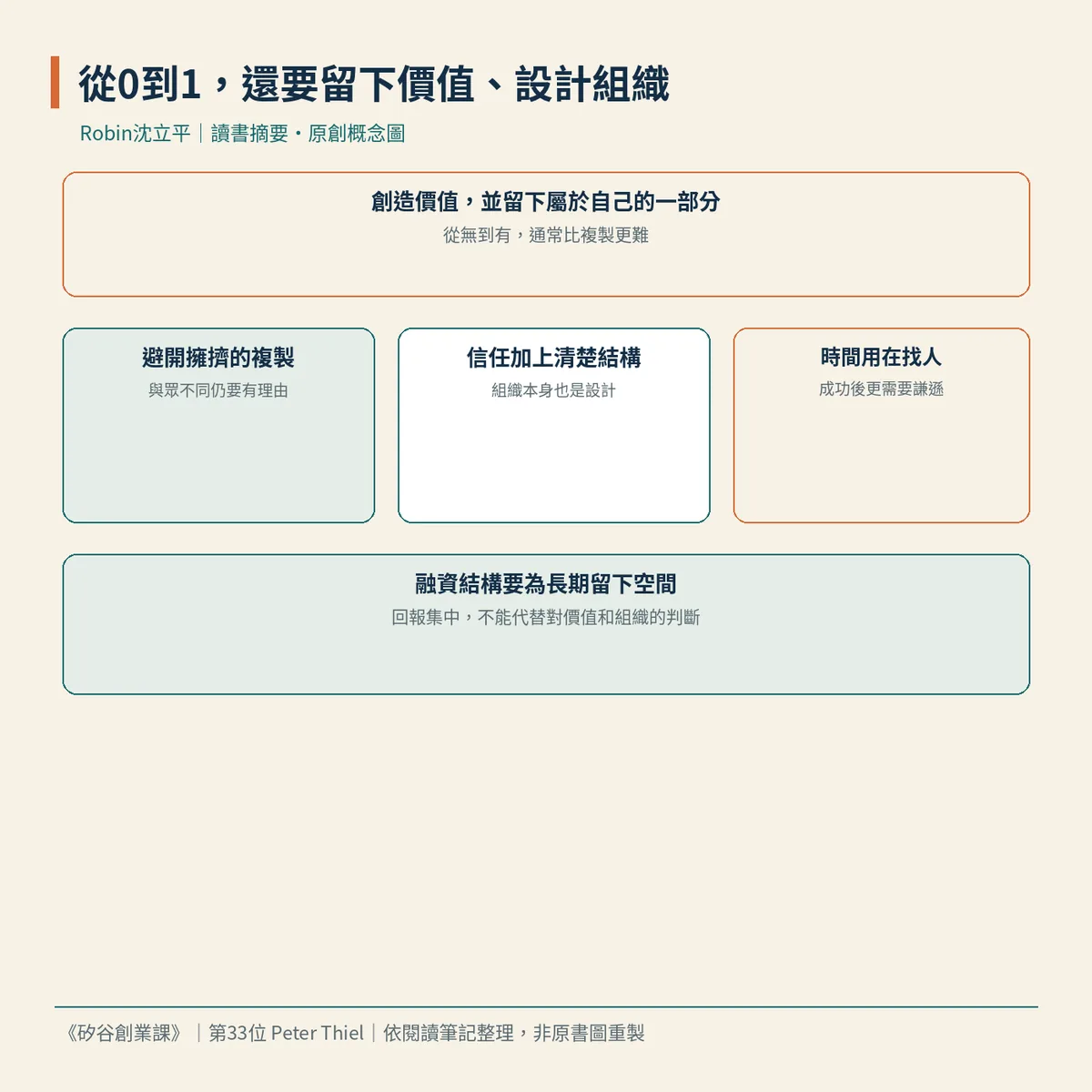
The book describes Peter Thiel as a partner at Founders Fund and notes that he was Facebook’s first outside investor. These descriptions reflect the time when the book was written. His discussion of innovation goes beyond whether there is a new idea. He also asks whether the company can create value, endure over the long term, and retain a share of that value. Going from nothing to something is usually harder than copying what already exists. Organizational design and how much time founders spend recruiting determine whether the innovation can last.
Thiel believes a company must create value, capture some of it, and sustain its advantage. Vertical innovation from 0 to 1 is harder than replication from 1 to n, but also more likely to escape crowded, undifferentiated competition. When everyone pursues the same thing, prices are squeezed and attention is diluted. Opportunities often lie where few people are looking seriously but where a reasoned case can be made. Sustained, cumulative growth can indeed compound, but only if real value is being created, not merely a fast-looking curve.
To make innovation last, the organization itself is part of the design. The book presents this observation: teams with high trust and clear structure are better able to make creativity part of everyday work. Relying only on personal relationships or only on rigid systems can both lead them off course. This is about how trust among people works with institutional structure, not a diagram everyone must copy. A culture needs distinctive shared traits and a balance between competition and creation. Founders and key people must devote a substantial share of their time to recruiting, because people determine how far a company can go. After success, the easiest mistake is to assume one already understands everything. Knowledge needs humility alongside it, so a temporary result is not mistaken for permanent correctness.
Networks also matter in venture capital because they increase future options, but they cannot replace value itself. A contrarian search for overlooked opportunities still needs reasons and an explanation of where value differs. Venture returns are inherently concentrated. Many small wins often cannot deliver the results these funds need. Yet that does not make every unusual idea worth backing. Financing instruments and equity incentives should leave room for the long term. Locking a structure in too early, before conditions are clear, can make later correction difficult.
The conclusion: going from 0 to 1 means more than introducing something new. It also means retaining value and designing an organization that can endure. Avoid crowded replication, spend time finding the right people, and remain humble after success. Contrarian choices need a foundation. Concentrated returns only tell us outcomes can diverge widely; they cannot replace judgment about value and organization.
One deeper insight
I think presentations about “going from 0 to 1” are usually thorough, while the thinking about organization and value capture is thin. If founders cannot explain how the advantage will be defended or how much time they actually devote to recruiting, the supposed innovation often remains a slogan.
Three suggestions
First, describe the step you consider your move from 0 to 1: what new value does it create, what share do you intend to retain, and how does it differ from existing approaches based on replication? If all you can say is “We are different,” make the difference concrete first.
Second, examine what supports trust within the team and which activities already have clearly documented practices. Also list how much time the founders have recently spent recruiting and what the next key hire needs to add.
Third, if you are making an unconventional judgment, write down the reasons, where the value differs, and how you will avoid assuming you know everything after success. Do not call unsupported opposition an innovation strategy.
#ADozenLessonsForEntrepreneurs #PeterThiel #ReadingNotes
These are reading notes and reflections based on my personal understanding. I recommend reading them alongside the original book for the full context.
Comments
What do you think? Share your experience or questions.
Sign in to comment, reply or like. Sign in / Sign up
Loading comments…