Note 32 | Preserve Runway and Options, and Sell the Product Yourself
These are Robin Shen’s original reading notes and commentary, written in his own words after reading Tren Griffin’s A Dozen Lessons for Entrepreneurs. They are not the original book, excerpts from it, or an official publication. Methods and concepts from the book are attributed to Tren Griffin; other sources are identified where stated. For reference only; not investment advice.
English translation of Robin’s Chinese reading notes and commentary. Passages are paraphrased, not verified verbatim quotations from the original English edition.
A Dozen Lessons for Entrepreneurs — Chapter 32, “Mark Suster: Upfront Ventures” (Part II, “The Venture Capitalists”)
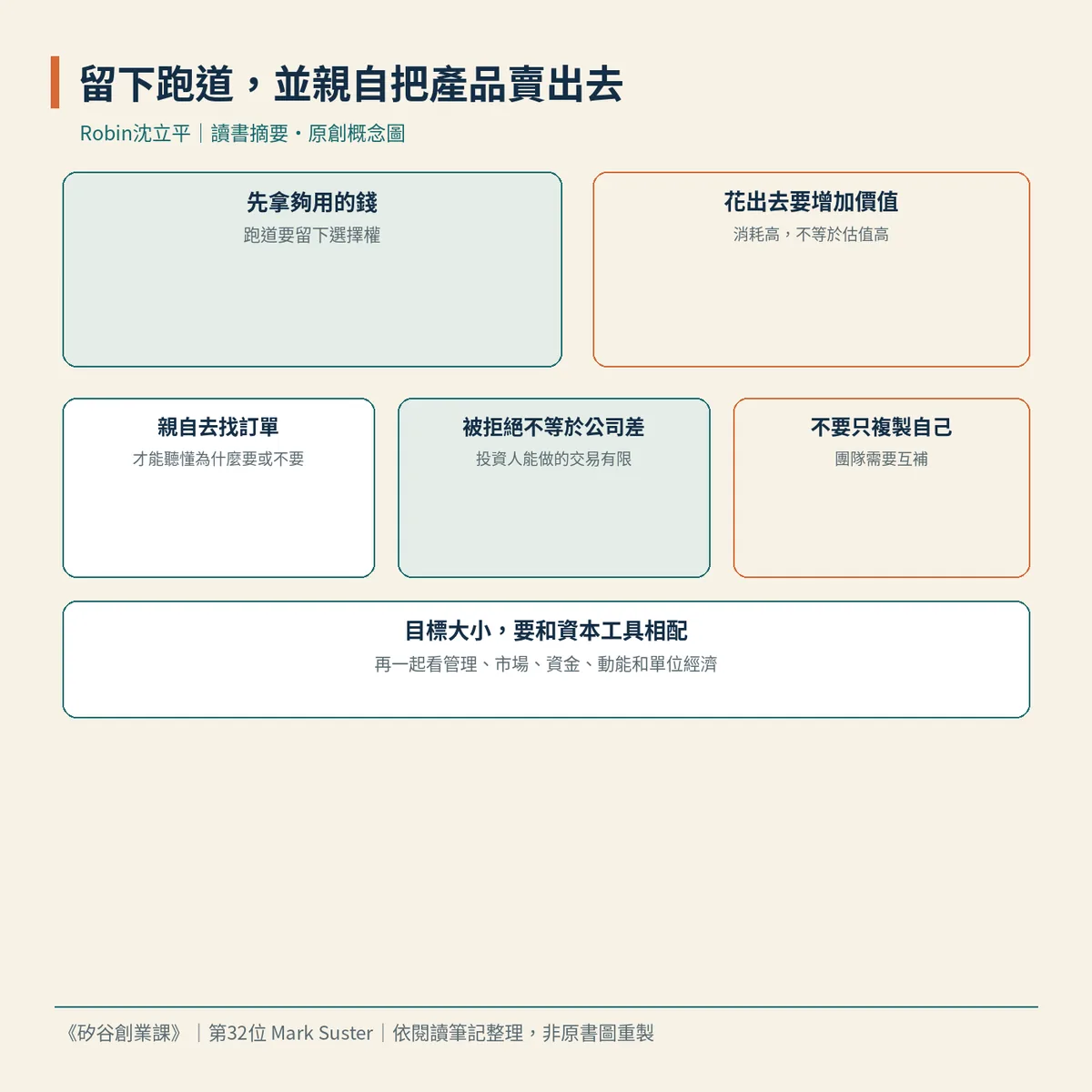
The book describes Mark Suster as an entrepreneur, angel investor, and managing partner at Upfront Ventures. These descriptions reflect the time when the book was written. His recurring point is not to burn more money, but to first preserve sufficient runway and options, and have founders sell the product themselves. Money spent should increase the company’s value. A lean culture and a complementary team do more to determine whether a company can keep going than a busy-looking expense sheet.
Suster believes the first round should raise “enough,” not as much as possible all at once. At the time, he recommended aiming for 18 to 24 months of runway and starting preparations for the next round before cash ran out. Too little money forces a company to pull back. Too much at once can sometimes accelerate spending. Capital spent should at least make the company more valuable. A high burn rate does not automatically mean a high valuation. The author recounts an example Bill Gurley discussed: when new funding was temporarily unavailable, some companies preserved their options by cutting burn substantially and weathering the downturn. Investors can give serious attention to only a limited number of deals each year. Rejection does not necessarily mean a company is bad; investors’ time and capacity for board seats are limited.
Founders must go out and win orders themselves. If they hand sales entirely to others early on, they will struggle to really understand why customers want the product or why they do not. Resilience is one trait Suster values: when plans are disrupted, founders must still acknowledge failure, investigate why, and listen to candid feedback. A weak market can sometimes be a good time to start a company because there may be less competition and less crowding in the talent market. In negotiation, preserve alternatives first and clarify the terms before agreeing. Books cannot replace operating experience. Early-stage chief executives in particular need to do the work themselves. Entrepreneurs’ job is to make things happen, not merely analyze them or explain them afterward. Recruiting should not simply reproduce the founder either. The team needs complementary people.
In assessing a company, Suster considers management, market size, funding, and momentum together, then checks them against gross margin and unit economics. If the goal is simply a healthy, manageable business, bootstrapping or less outside funding may be more appropriate. If the ambition requires substantial capital to unfold, then consider the cadence of venture capital. The path should fit the scale of the goal, rather than assume every company should burn its way to the next round.
The conclusion: preserve runway and options first, make spending genuinely add value, and have founders personally sell the product into the market. Rejection need not be read as a complete repudiation. Downturns can also create room and access to talent. Financing tools should match the goal. Unit economics say more than headline burn about whether a company is on the right path.
One deeper insight
I think cash discussions often become “Would another round make us feel safer?” The better starting questions are whether the current runway lets founders complete a round of selling the product themselves and gather real feedback, and whether each expenditure makes the company more valuable. If neither happens, more money merely uses up options sooner.
Three suggestions
First, write down roughly how long current cash will last, what conditions will trigger preparations for the next round, and what kind of value this money should add to the company. If the only answer is “Keep the current burn going,” first revisit whether the product is selling.
Second, list the customers or prospects the founders personally contacted this week and which judgments changed as a result. If the list is empty, pause the effort to “find someone to sell for us” and write down the questions you need to ask customers yourself.
Third, check whether everyone on the team is the same kind of person as the founder, and which is weakest among management, market, funding, momentum, and unit economics. Also write down the scale of this business’s ambition and whether it really requires the funding cadence of venture capital.
#ADozenLessonsForEntrepreneurs #MarkSuster #ReadingNotes
These are reading notes and reflections based on my personal understanding. I recommend reading them alongside the original book for the full context.
Comments
What do you think? Share your experience or questions.
Sign in to comment, reply or like. Sign in / Sign up
Loading comments…